
56th Annual Meeting …
56th annual meeting of the Association of Tropical Biology and Conservation
- 2019
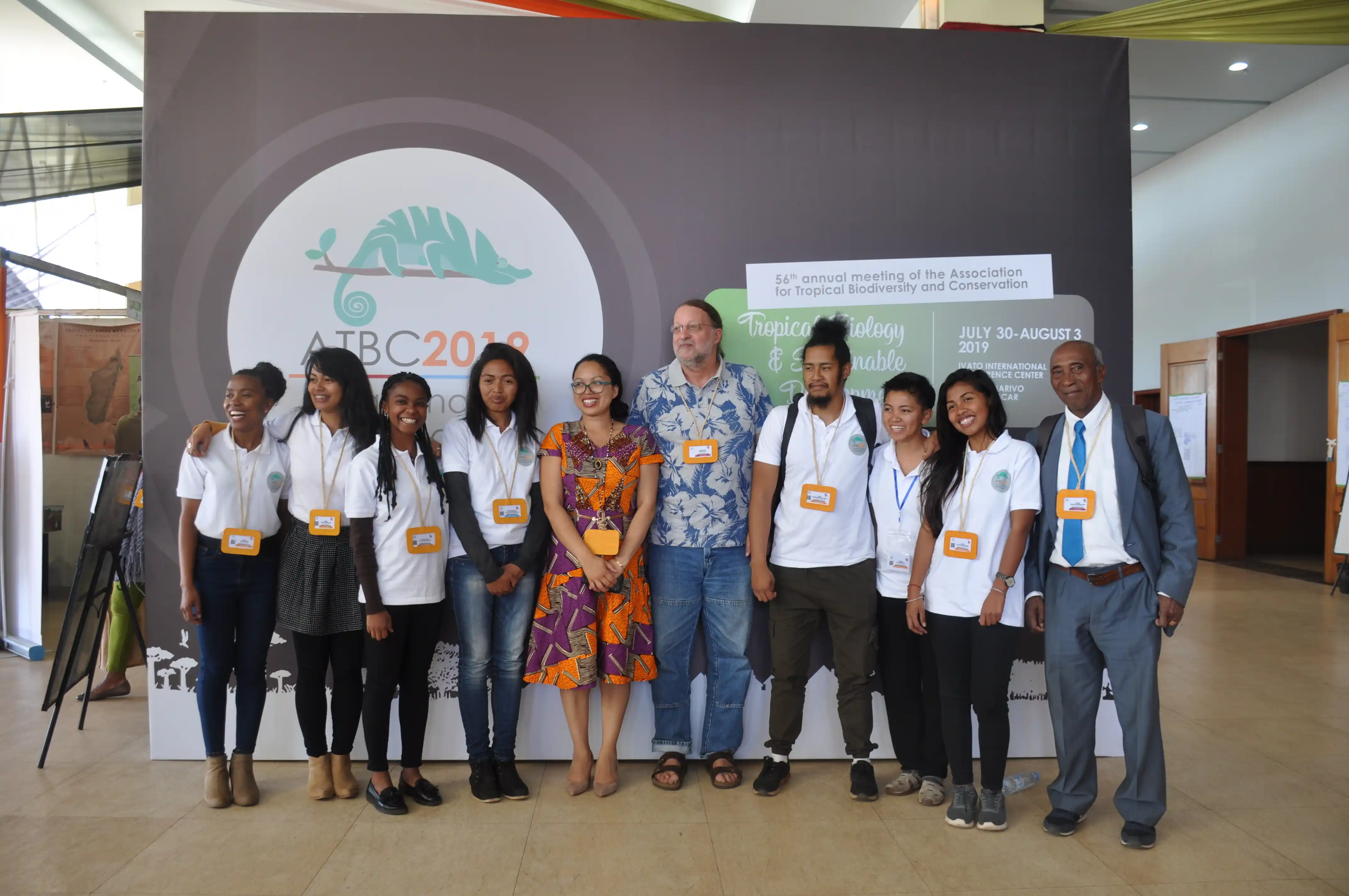
Madagascar was chosen to host the 2019 annual meeting of the Association of Tropical Biology and Conservation, which was held in Antananarivo from 30 July to 3 August 2019. Overall 723 delegates from 44 countries, including 250 Malagasy participants, attended the five day conference held at the Ivato Conference Center. This was a major event for Madagascar and one of the intents of the local committee to have the meeting in Madagascar was to informnational and local politicians and business groups of the importance of the island’s renown biodiversity and bring to light the critical need for the country to take the necessary steps to conserve this natural patrimony in an immediate and clear fashion. This aspect was embodied in the petition of Ivato, presented in four languages (English, French, Malagasy, and Spanish (see https://www.atbc2019.org/), which was signed by hundreds of people from around the world and envisioned to be signed by the President of Madagascar or a designated Minister at the closing ceremony of the meeting. To date (January 2020), this latter step has yet to occur. Association Vahatra was one of the local supporting organizations and with different members taking different roles: Achille Raselimanana was a member of the scientific committee, and chair for five sessions and Steve Goodman was the co-chair of the academic component. Steve also presented a plenary lecture during the conference. Association Vahatra made available competitive grants for 30 Malagasy participants, including 17 graduate students and 13 professors/researchers to take part in the meeting. A number of oral and poster presentations were made by Vahatra students at the meeting. Vahatra also had a book stand
Because Madagascar has been an island for tens of millions of years, many of the plants and animals that live there are found nowhere else.