
Scaria (Towards Sustainable …
SCARIA (Towards sustainable community-based mitigation of rodent issues in African cities)
- 2021
Rodents are implicated in an estimated 400 million worldwide annual zoonotic infections, and associated with massive crop and stock destruction, thus representing a major threat to both health and food security. Farmers following an Ecologically Based Rodent Management (EBRM) system have made progress in rural tropical areas, especially through field trials and associated with new monitoring techniques. This management scheme relies on a good knowledge of the biology of pest rodents and community-based sustainable modifications of the environment in order to decrease rodent populations. However, large gaps in knowledge remain about urban rodents that are abundant and highly deleterious to the lives of millions of city inhabitants, especially in poor and rapidly expanding settings.
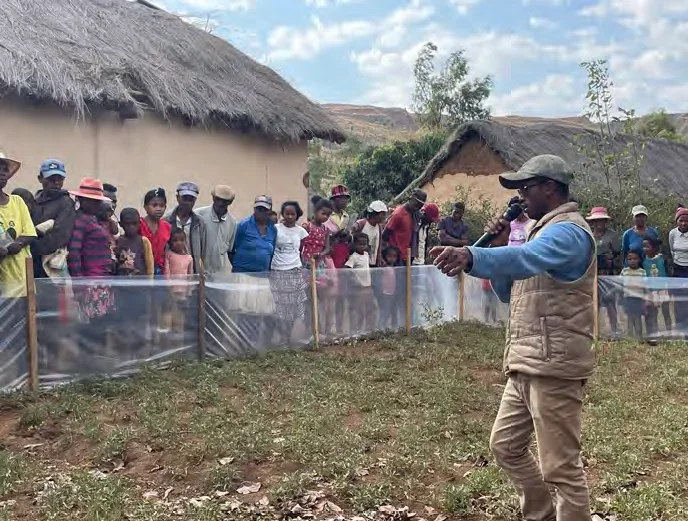
Accordingly, on the basis of recent scientific studies and WHO expert syntheses, there is an urgent need for interventional research on rodent-associated issues in cities, especially in developing countries. SCARIA is a sustainability science project that explicitly aims at addressing such challenges via pathways to sustainable, community-based mitigation of rodent impacts in four African countries (Benin, Ethiopia, Niger, and Madagascar), specifically focusing on city slum settings.
To achieve this, a panel of academics, public services, social enterprises, local NGOs, associations, and governmental representatives pursue two main objectives: (1) to build and animate multi-stakeholder local working groups in four urban living labs who rely on both scientific and local knowledge to formalize an urban EBRM adapted approach to each local socio-economic, cultural, and environmental context; (2) to produce baseline data (cartography; rodent diversity, mobility, and spatial distribution; zoonotic pathogens in rodents and humans; socio-economic impacts of rodents; project perception by the inhabitants) in all four pilot sites to provide socio-environmental proxies for future urban EBRM implementation and evaluation.
For Madagascar, Voahangy Soarimalala, Steve Goodman, and student assistant from Institut des Sciences et Techniques de l’Environnement, Université de Fianarantsoa, are involve on this project.
Because Madagascar has been an island for tens of millions of years, many of the plants and animals that live there are found nowhere else.