
Beprep Project
BEPREP Project
- 2023
BEPREP, which stands for Best Practices for Biodiversity Recovery and Public Health Interventions, aims to elucidate the role of undisturbed and restored biodiversity in mitigating threats to health security from zoonotic and vector-borne diseases along the infect-shed-spill-spread cascade, in order to identify best practices of nature restoration, including rewilding.
The design of this research project, funded by the European Commission, is to identify and characterize these aspects in natural forest, degraded, and restored habitats, using live-capture traps to examine the presence and population dynamics of small mammals. Research designed for Africa, including Madagascar, includes the collection of biological samples from possible small mammal reservoirs and invertebrate vectors to characterize novel and established pathogen networks. The traits and interactions of pathogens, vectors, and reservoirs that contribute to increased disease risk and spread to test if ecosystem restoration by rewilding can recover biodiversity and mitigate disease risk (e.g., by reducing population size of introduced rodent reservoirs).
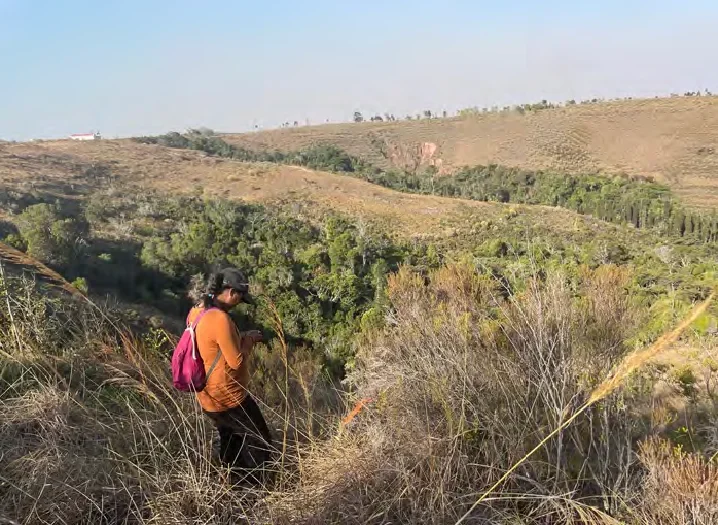
Study sites on Madagascar are Ankafobe in the Central Highlands, a relict and very small montane humid forest, and Ankarabolava and Agnakatrika in the southeast, both lowland moist evergreen forest fragments. A Ph.D. student from The University of Antananarivo, Salohy Ravelotafita, is integrated in this project in the context of her thesis.
Because Madagascar has been an island for tens of millions of years, many of the plants and animals that live there are found nowhere else.