
Helmsley Charitable Trust …
Helmsley Charitable trust – capacity building, phase II
- 2020
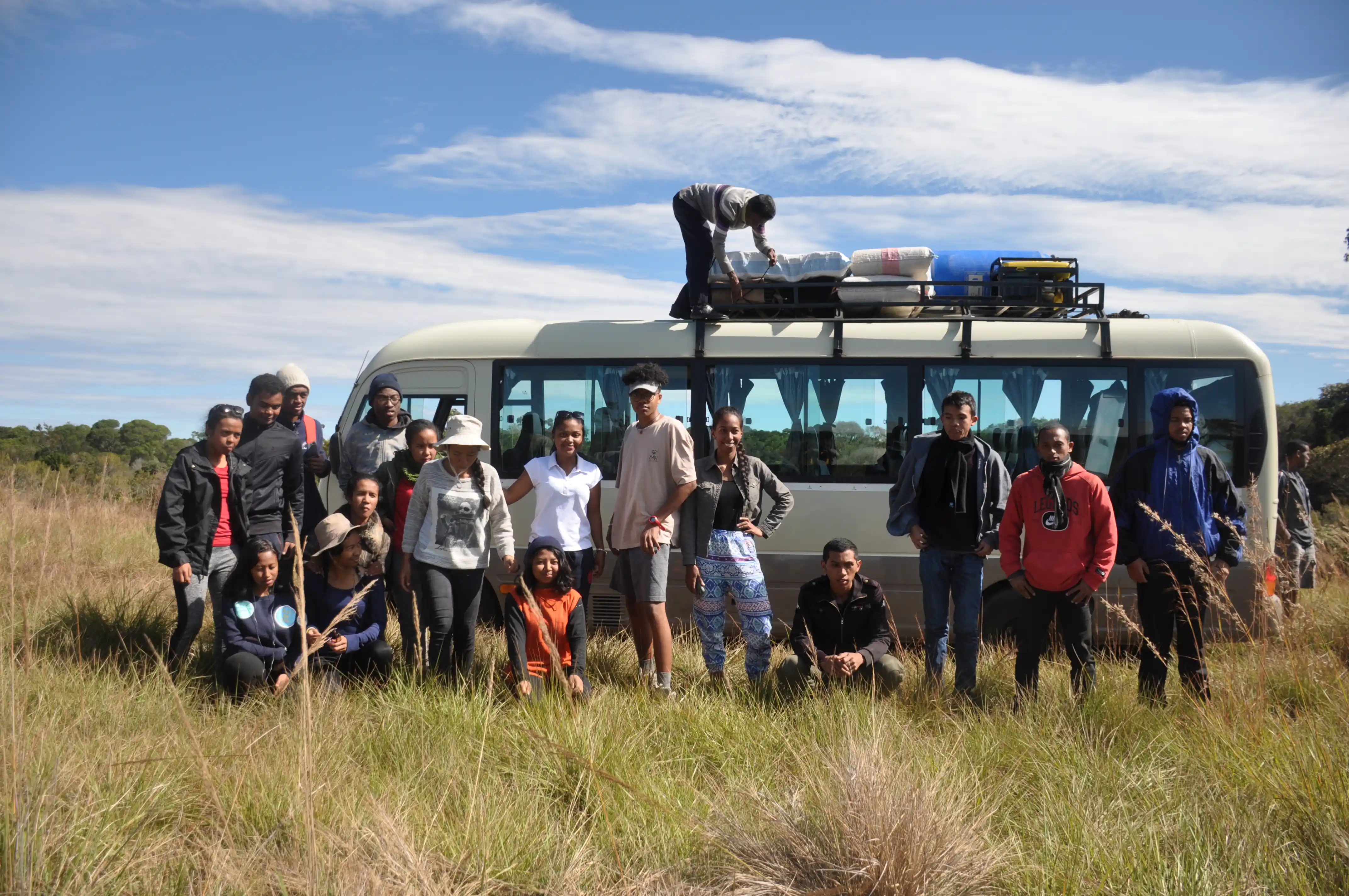
This project, entitled “Development of scientific capacity for Malagasy conservation biologists”, commenced in January 2017. The project has four different aspects: 1) field schools each year focusing on young Malagasy graduate student to help in their scientific orientation and skill development; the participant groups will also include some individuals working in protected areas management (e.g. Madagascar National Parks) and field practitioners for conservation organizations (most selected from other HCT financed projects); 2) field studies and different forms of mentoring for five Ph.D. students and two Master’s II students enrolled at The University of Antananarivo; 3) continued advancement of scientific and general publications associated with Vahatra scientists and students, as well as the Malagasy scientific community, and 4) the publication of a large-scale synthesis on the protected areas of Madagascar (see above, “Presentation of protected areas book”). In 2019, two different field schools were carried out. The first was held between 20 and 26 April, in the Réserve Spéciale d’Ambohitantely, Analamanga Region and was attended by 18 students from the University of Antananarivo, as well as one from the Lycée Français of Ambatobe, Antananarivo. The second took place in the Réserve Spéciale d’Ankarana with six students from The University of Antsiranana and one from The University of Antananarivo, and two conservation agents of Madagascar National Parks working in the same protected area During the course of these multidisciplinary field schools, these students interact directly with professional biologists working in different disciplines of zoology. During the second field trip, they have also the opportunity to profit the presence of a specialist on botany and another scientist specialist on lichens. This kind of training provides an excellent means for each student to decide what group of animal or type of study they are the most interested with respect to their future research project and study. These outings are often eye-opening experiences for the young Malagasy participants. At the same time, they provide an excellent means for Vahatra to pick the students they would like to work with in advancing their Master or Ph.D. studies Concerning the status of student projects, three of the seven students (one Ph.D. degree and two master’s degrees) affiliated with this grant have defended the results of their studies in 2019. The remaining ones are at a very advanced stage and will presented their researches at the first portion of 2020.
Because Madagascar has been an island for tens of millions of years, many of the plants and animals that live there are found nowhere else.