
Land Use In …
Land use in the Sava region and global health challenges
- 2019
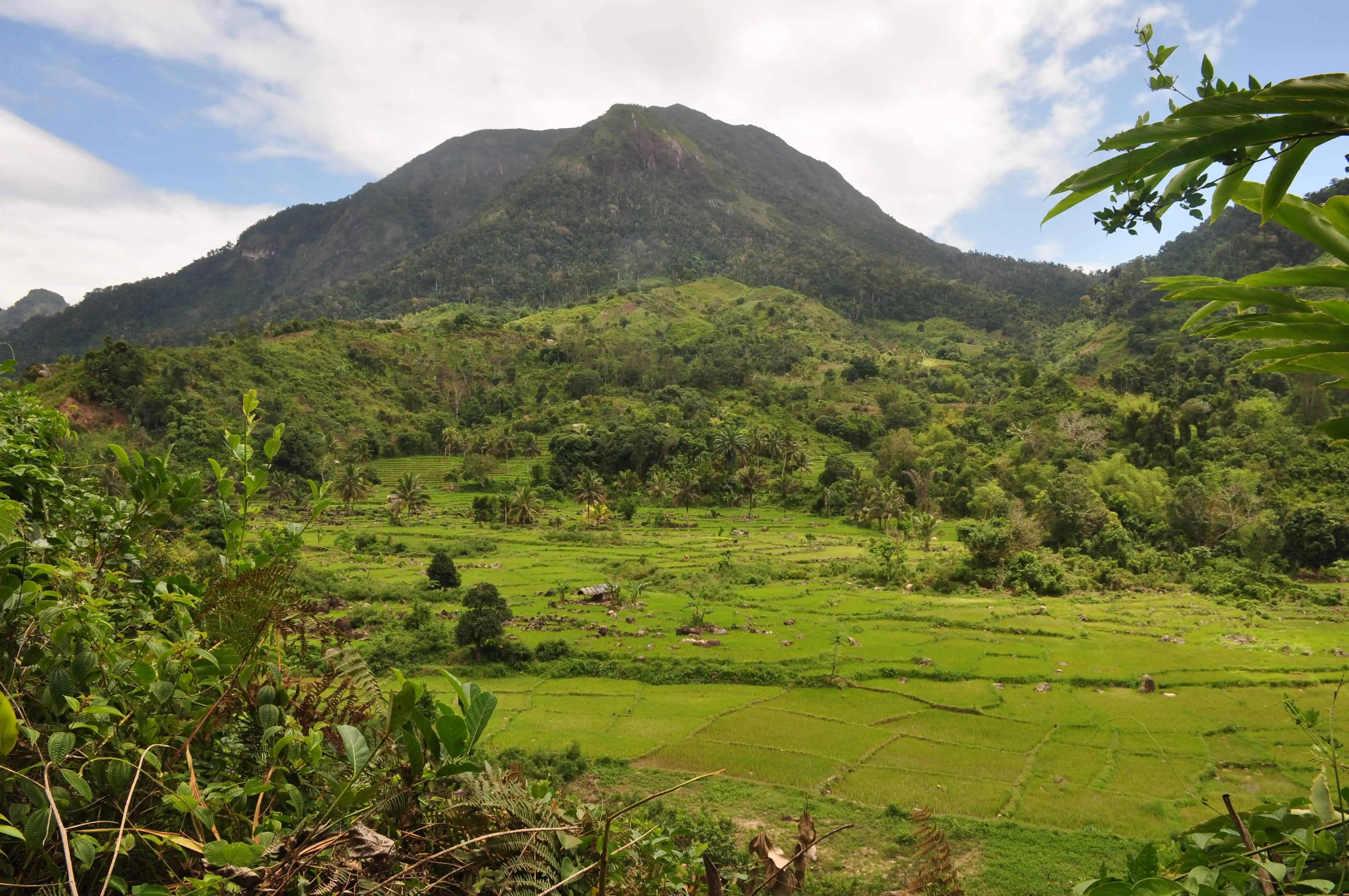
This project is based on a grant awarded to Duke University, with Dr. Charles Nunn as the Principal Investigator, in 2019 through the Ecology and Evolution of Infectious Diseases (EEID) program, a joint initiative between the National Institute of Health and the National Science Foundation (NSF). This large-scale project aims to understand the linkages between diseases circulating in the foothills of the Marojejy Massif across a habitat mosaic of native forest, agricultural areas, and near villages for which endemic and introduced animals may act as reservoirs and the source of transmission. Association Vahatra is one of the collaborating organizations focused on field capture of bats, endemic and introduced small mammals, and collecting the needed samples for the zoonotic disease analyses. Toky Randriamoria, a post-doc in the context of the project, is responsible for the field sampling and seconded by Voahangy and Steve. A new assistant, Rianja Nantenaina Randriamifidisoa, has been engaged to reinforce the field team. Fifaliantsoa Rasolobera, the previous field assistant, is now incorporated in the project as a PhD student and working on small mammal ecology and distribution. Three different field camps at the foothills of the massif, each visited during three different seasons for sampling in a range of habitats, have solar panels to provide the needed energy to run a refrigerator to keep samples at the required low temperatures. In association with a considerable range of collaborators studying multiple facets of local circulating zoonotic diseases and parasites, this research project aims to study novel methods to predict disease spread, particularly different infectious diseases being important human health concerns on Madagascar. Three Vahatra students from The University of Antananarivo and one from The University of Antsiranana are taking part in this project: Tamby Ranaivoson (PhD student) and Fifaliantsoa Rasolobera (PhD student, mentioned above) working on small mammal ecology and reproduction; Daniel Falimiarintsoa (Masters student) working on bat ecology and habitat associations on the southwestern slopes of the Marojejy Massif; and Johanna Rafanomezanjanahary working on bat ecology and habitat associations on the southwestern slopes of the Marojejy Massif; Daniel will present in March 2022 and Johanna presented in March 2021. Fieldwork for this project continues until mid-2023.
Collaborators
- Duke University
- National Institute of Health (NIH)
- National Science Foundation (NSF)
Because Madagascar has been an island for tens of millions of years, many of the plants and animals that live there are found nowhere else.