
Arboretum
Arboretum
- 2024
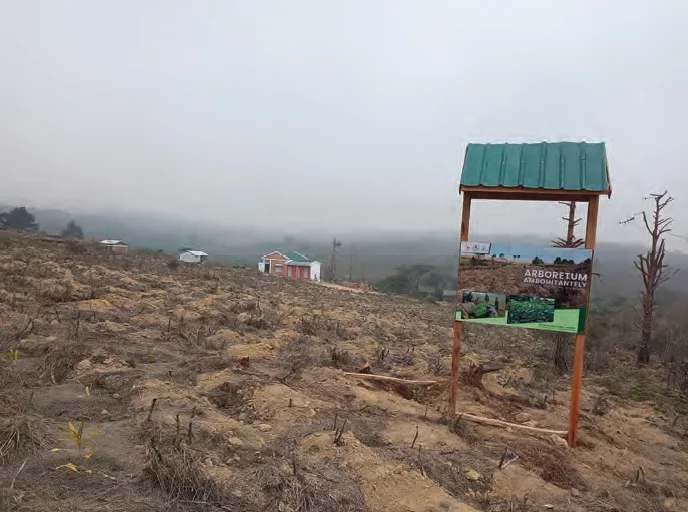
The biological station was originally surrounded by secondary grasslands and groves of introduced pine trees. This landscape was redesigned to optimize reforestation initiatives, combat invasive species, and enhance the surrounding spaces. As part of this effort, a portion of the available funding was used for the creation of an arboretum around the biological station.
Since May 2024, all pine trees in the area have been removed, and local communities have undertaken clearing, cleaning, and hole-digging activities associated with establishing the arboretum. In June, the team began planting forest species grown in our nurseries to be transplanted at the site. Between June and August 2024, 3,500 seedlings have been transferred to the arboretum. These plantings include 42 native tree species from Ambohitantely, eight of which are classified as threatened and are among the target species of the project funded by the Franklinia Foundation and CEPF. Monitoring conducted in mid-December of the trees planted in the arboretum revealed a survival rate of 96%, which is very high, challenging certain preconceptions about the slow growth of Madagascar’s native species.
Once the arboretum has been properly established, visitors to Ambohitantely will have the opportunity to learn about the species studied by Vahatra, observe our planting methods, appreciate the processes and results of our activities, and discover the names of the plants present on-site. The expansion of the arboretum continued in December 2024, bringing its total area to 2.5 hectares.
Because Madagascar has been an island for tens of millions of years, many of the plants and animals that live there are found nowhere else.