
Save The Rainforest …
Save the rainforest sweden (Rädda Regnskog) project at Ambohitantely
- 2021
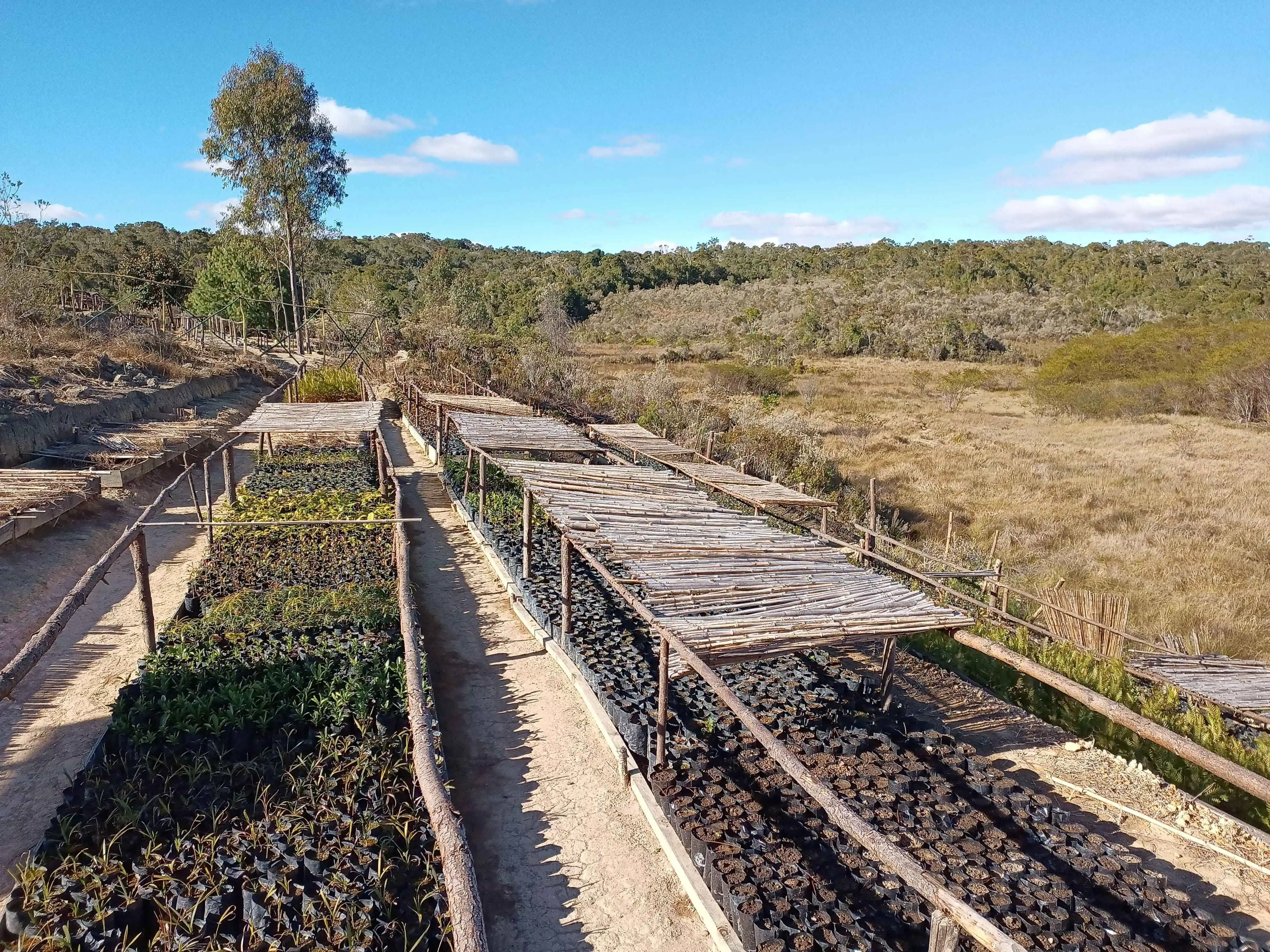
The Réserve Spéciale d’Ambohitantely is one of the last remnant Central Highland montane forests on the island and it is of high priority to conserve, even though already notably fragmented. This fragile and vulnerable relict forest is home to rich and unique biodiversity from the invertebrate to the vertebrate fauna as well as for the flora. Since 2007, the Association Vahatra has organized in this protected area a series of regular research missions, field schools or forms of ecological and biological training for students, as well as for conservation agents and managers. Over the past decades, between the anthropogenic pressures of wild grassland fires, some being set as acts of anarchy, which enter into the remaining natural forest, the number of forest parcels and their surface areas have been dramatically reduced or disappeared forever. In a collaborative project between Association Vahatra and Madagascar National Parks, the organization responsible for the management of the protected area, and with funding from Save the Rainforest Sweden, and in collaboration with Johannes Bergsten, Swedish Museum of Natural History in Stockholm, we have taken steps to try to conserve Ambohitantely and in association with local villagers. The first critical step to conserve the forest was the completion of a firebreak around the largest remnant parcel, a massive activity and done 100% by hand. Between April and June 2021, just before the bush fire season, about 19 km of firebreaks were completed and these were installed in a manner to stop open country fire progression into the forest. Since 2015, scientific members of Association Vahatra with different colleagues were solicited to conceive and design a simple and practical guide for ecological restoration of three protected areas (Marojejy, Masoala, and Ranomafana). To restore the ecological integrity of Ambohitantely, a significant portion of which has been destroyed or heavily degraded by bush fires, and several blocks will soon not be viable without intervention, the same methods and technics have been applied as for the sites mentioned above. An expert Malagasy Botanist in collaboration with Achille is in charge of the implementation of this challenging project. For now, we adopt active and assisted passive restoration strategy. A plant nursery has been established and the restoration site, that will link in a corridor fashion the main forest and a nearby forest fragment, is already prepared with a matrix of dug planting holes filled with compost and ready for transplantation in early 2022. Previous studies carried out at Ambohitantely mainly concern vertebrates and plants, but the site includes different aquatic habitats for insects. To advance studies on the diversity and ecology of aquatic insects, Vahatra has engaged a post-doc student from the Entomology Department at The University of Antananarivo to carry out biological inventories of aquatic insects within and around the protected area. He is also in charge of the training and mentoring of Master students working on insects at his home institution. Two of these students are now finalizing the preparation of their memoirs. In Ambohitantely, there is no functional infrastructure other than rugged camping sites for researchers, students or for other visitors. To promote research activities and to increase the frequency of visitors, in the context of this project, we are in the process of constructing a humble biological station of 14 x 5 m with three rooms (kitchen, lab, and large room/dormitory for 8 persons). Construction is now well underway and 40 000 fires clay bricks, cement, iron, etc. have been delivered to the site. The building is at the edge of the Madagascar National Parks village complex and a short distance from the main forest.
Because Madagascar has been an island for tens of millions of years, many of the plants and animals that live there are found nowhere else.